
SUAVE PATRIA
Stories of a Nation in Motion
PROGRAM
Bienvenidos
For me, México lives in the stories we carry—our faith, our celebrations, our heartbreaks, and our determination to persevere. SUAVE PATRIA brings those stories to the stage, honoring a nation whose beauty and complexity live in its people.
Our show takes inspiration from Ramón López Velarde’s poem La suave patria (1921). What draws me to this poem is its affection for a real México, including its charm, contradictions, and imperfections. I reflect on a love of a country that grows from knowing its people and everyday life, beyond just grand patriotic declarations. That is the spirit I bring to this program: love and respect for who we are, honesty about what we have endured, and hope for what we can become together.
Our community has faced struggles across generations and across borders. Through it all, we have continued to create, gather, and care for one another. That perseverance speaks to the greatness of our people: full of heart, generous in spirit, and always ready to share the best of ourselves with the world.
This very spirit is what I hope you see in Los Lupeños de San José. Behind every dance is a group of people who give their time, love, and dedication to keeping our traditions and stories alive. Our dancers carry the memory of those who came before us alongside the dreams of a generation still finding its voice.
Today, “¡Que viva México!” takes on renewed strength and meaning. It carries joy, struggles, and our promise to keep moving forward together.
¡Que viva México!
Sam Cortez
Interim Executive Director
Los Lupeños de San José
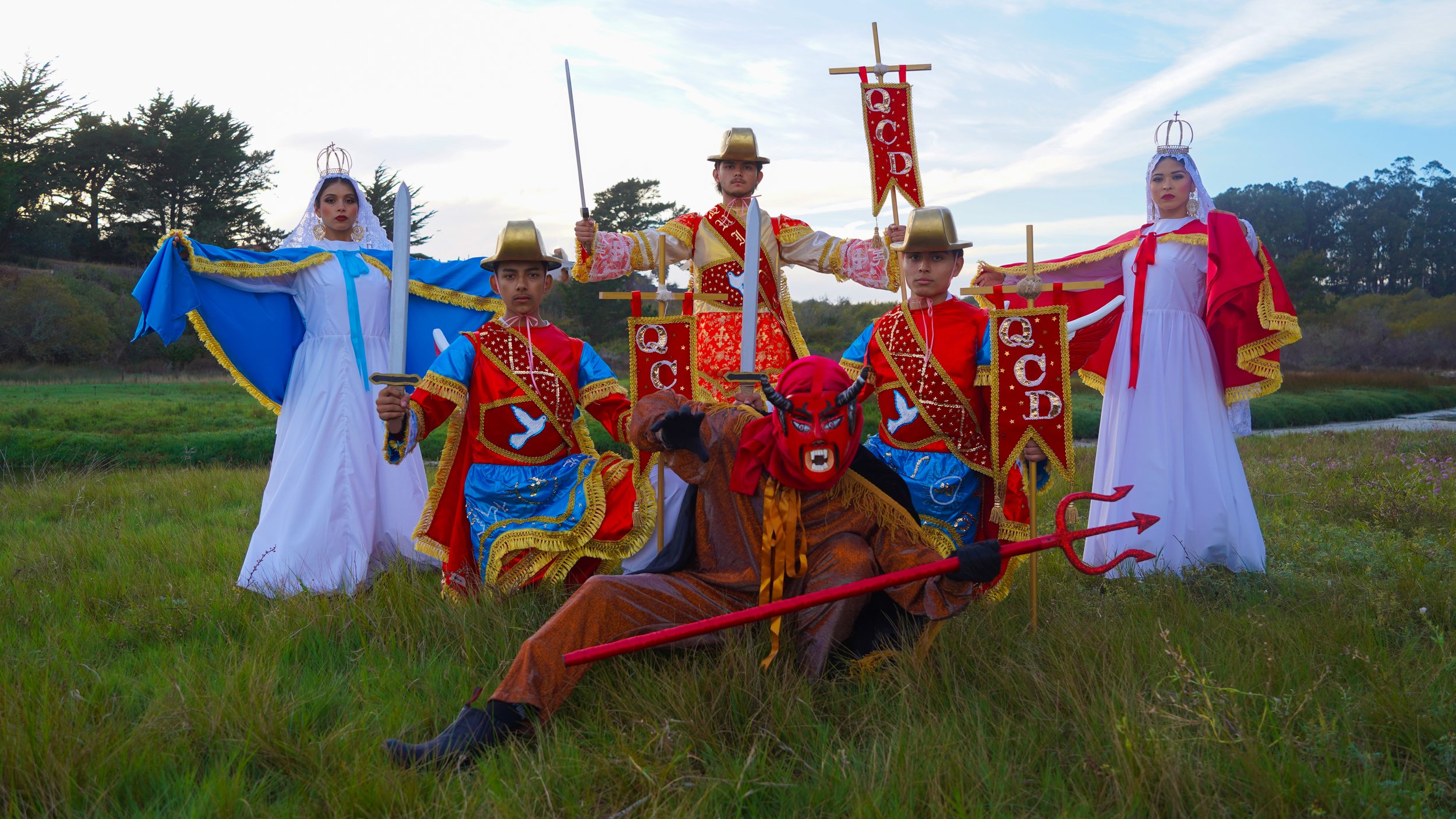
1. DANZA DE LOS MIGUELES DE LA SIERRA NORTE DE PUEBLA
In the northeastern Sierra of Puebla, the town of San Miguel Tzinacapan honors Saint Michael the Archangel each September 29th with a celebration where faith is carried in prayer and movement. At its heart is the Danza de los Migueles, a religious tradition that unfolds in the church atrium and throughout the town, reenacting the battle between good and evil and Michael’s expulsion of Lucifer from Heaven.
Here, dance becomes testimony—an offering shaped by generations of devotion. Its gestures honor protection, struggle, and spiritual guardianship, carrying teachings shared through family and sacred celebration. In the community that sustains this tradition, dancing is an act of prayer. The story is lived as well as performed.
SAN MIGUEL • SON DE MARCHA • SON DE MARÍAS • SON DEL DIABLO • SON DE BATALLA • SON DE FESTEJO • SON DE SALIDA
Original choreography: Vidal Calvario Tepox. Research and staging: Alejandro Ocampo, Christina Gil, Eduardo Zamora, Karina Castro, and Steven Gastelum, following their visit to Puebla through our Artist Exchange program, with support from the William and Flora Hewlett Foundation.
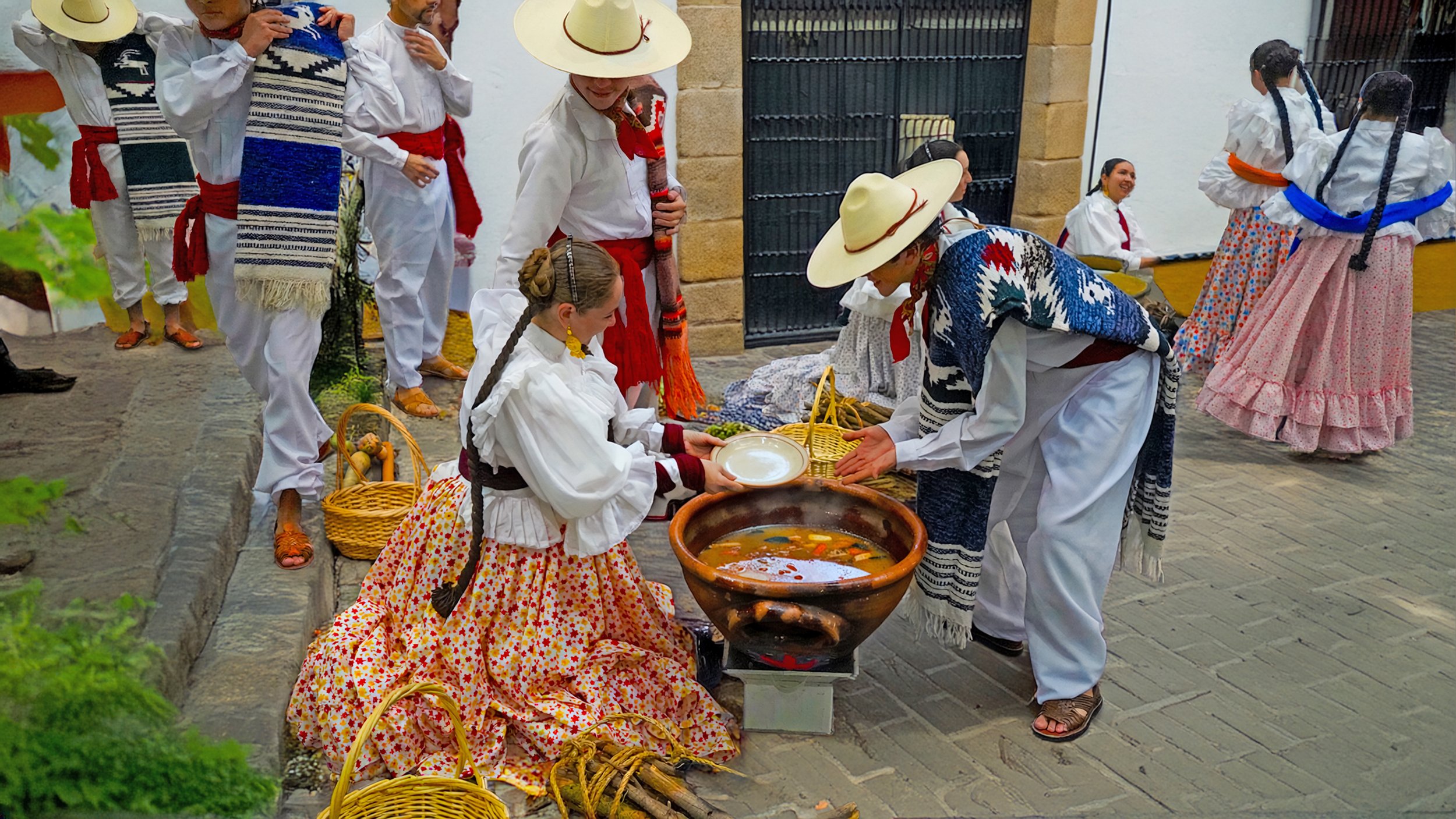
2. LOS JARABEROS DE NOCHISTLÁN, ZACATECAS
In Nochistlán, Zacatecas, the sound of violins, guitars, and tambora fill a town with a deep musical heritage that is deeply intertwined with its long history. Influenced by the region’s Caxcan roots and mestizo traditions, the jarabe brings people together in an exchange of rhythm, melody, and celebration.
From festivities honoring San Sebastián to pilgrimages devoted to the Virgin of Toyahua, music accompanies devotion and strengthens community ties. This suite takes inspiration from that enduring connection, bringing the character and exuberance of Nochistlán to the stage. Here, cultural resilience lives in the determination to gather, remember, and pass on the town’s rich musical legacy.
EL PAPAQUI • CHOTIS • EL MEDIO TORO • LOS GORGORITOS • POLKA
Original choreography: Samuel Cortez Balderas / Steven Gastelum
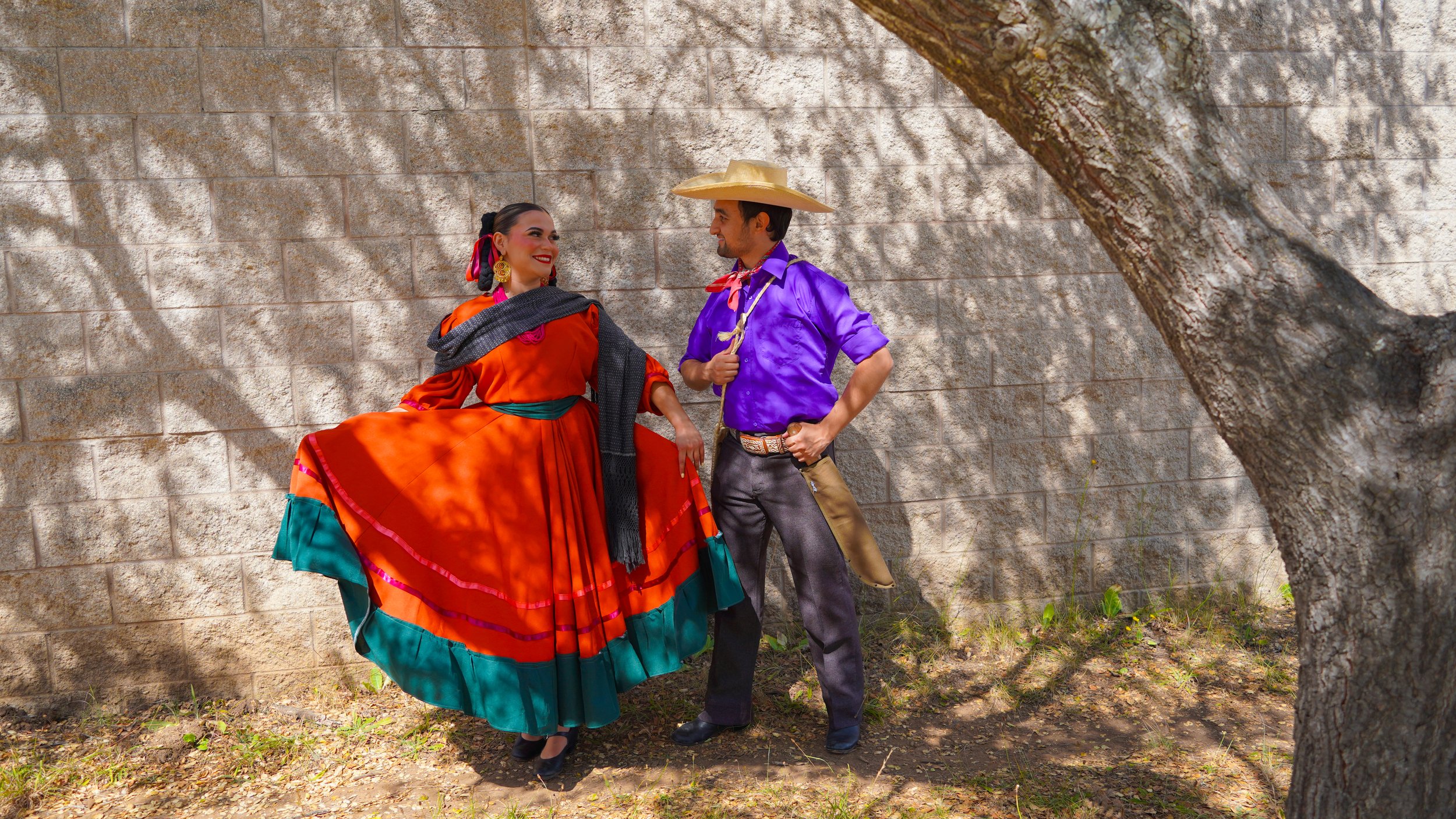
3. SONES ARRIBEÑOS DE XICHÚ, GUANAJUATO
In Xichú, Guanajuato, music and poetry meet in the spirited tradition of son arribeño. Verses draw on personal experience, local history, and social commentary, turning storytelling into an exchange between musicians and the community gathered around them.
For many men who leave to find work away from home, the New Year’s celebration offers a cherished opportunity to return home—to embrace their families, renew friendships, and reconnect with the place that shaped them. At the heart of this gathering is the topada, a musical and poetic encounter that continues through the night. Improvised storytelling challenges call for wit, skill, and endurance, while dance further enlivens the celebration.
This suite honors both the artistry of the festival’s performers as well as the emotion of a long-awaited homecoming. In the company of loved ones, familiar verses and rhythms reaffirm a sense of belonging that distance cannot erase.
EL XICHULENSE • LA ROSITA • ANDA BRIAGO EL GUITARRERO
Original choreography: Samuel Cortez Balderas based on research and stage work by Raul Alvarado
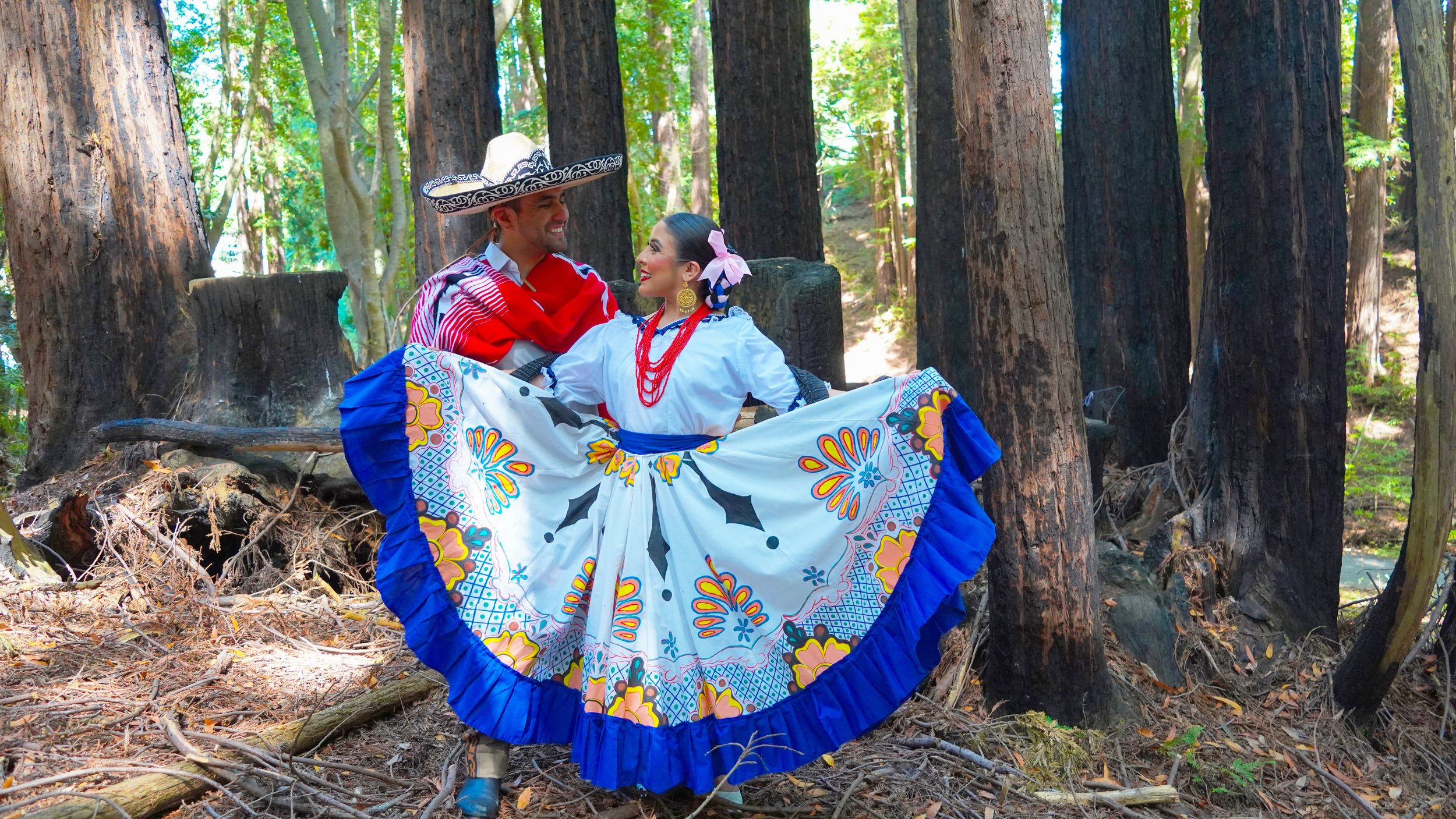
4. PERO SIGUE SIENDO EL REY
From Guanajuato to listeners across generations and borders, José Alfredo Jiménez gave voice to love, heartbreak, and longing. His songs carry the intimacy of personal confession and the shared emotions of those who recognize their own lives in his lyrics.
In this suite, his stories become movement. Through a choreo-drama shaped from selected compositions, dancers explore the tenderness, pride, and vulnerability within his songs. Scenes of devotion and loss follow one another like flashing memories, revealing how deeply a song can hold an experience. This tribute honors a composer whose canciones remain woven into Mexico’s cultural life, finding new expression in the voices and bodies of those who interpret them.
SERENATA HUASTECA • EL SIETE MARES • TU ENAMORADO • ELLA • PALOMA QUERIDA • A LA LUZ DE LOS COCUYOS • CANTA CANTA CANTA • EL JINETE • CAMINOS DE GUANAJUATO • EL REY
Original choreography: America Balbuena Cisneros
INTERMISSION
5. POR LOS CAMINOS DEL SUR
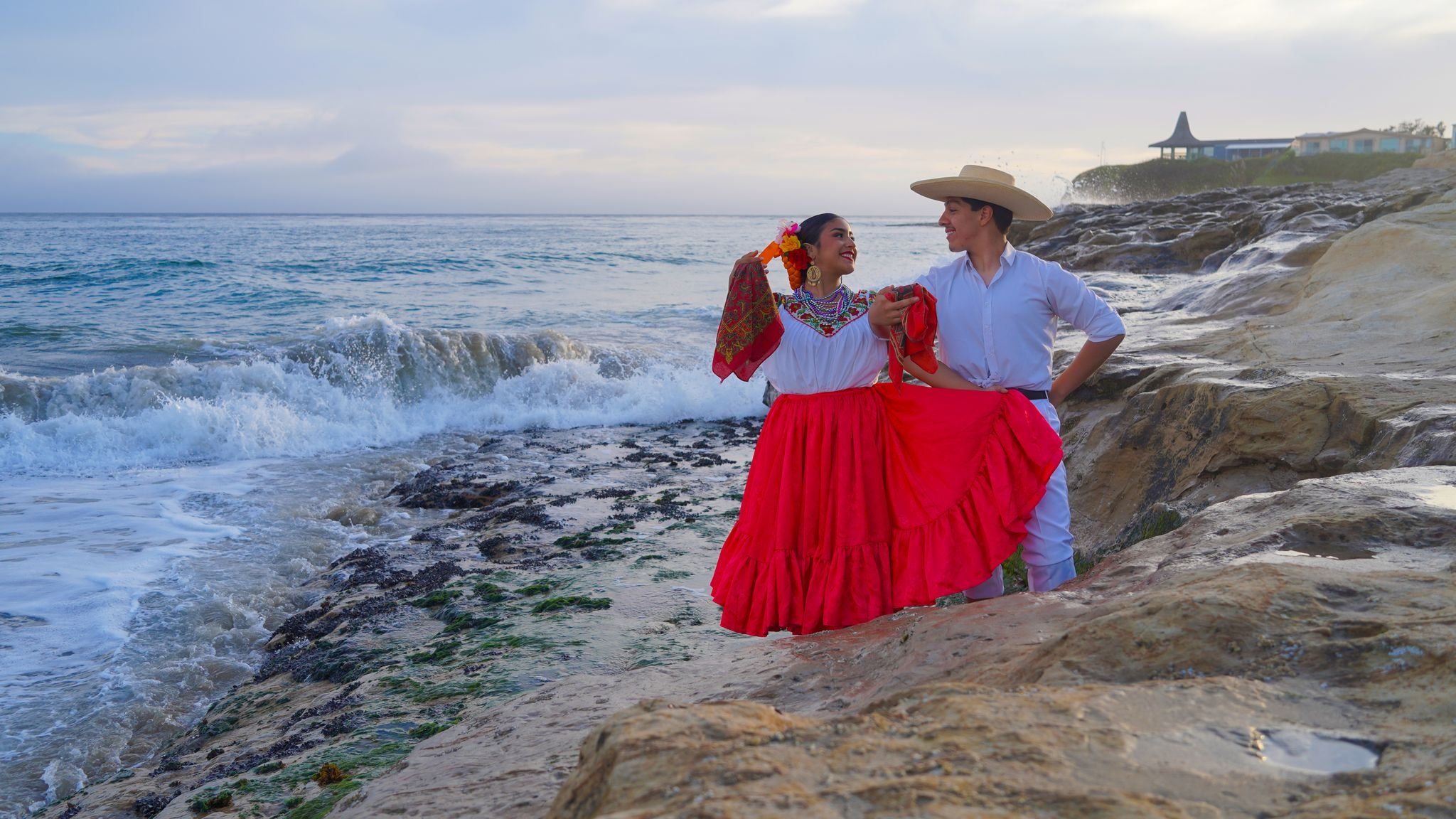
Across Guerrero, music and dance reveal the character of the communities that give them life. This suite journeys through three emblematic traditions: the spirited sones calentanos of Tierra Caliente, the resonant sones de tarima of Tixtla, and the chilenas of the coast.
Each genre speaks through its own rhythmic language. The music of the sones calentanos bring exhilarating energy, while the tarima becomes an instrument beneath the dancers’ feet. (Sentence about Tixtla, talk about animals) Along the Costa Chica, chilenas carry a history of cultural exchange across the Pacific, finding a lasting home in vibrant celebrations. Together, these dances offer a portrait of Guerrero through the vitality of its gatherings and the distinctive ways its people cherish music with movement.
LAS AMARILLAS • EL TORO DE ONCE • POPURRÍ TIXTLECO • LA SANMARQUEÑA
Original choreography: Samuel Cortez Balderas / Juan Carranza Soriano.
6. CORRIDOS MEXICANOS
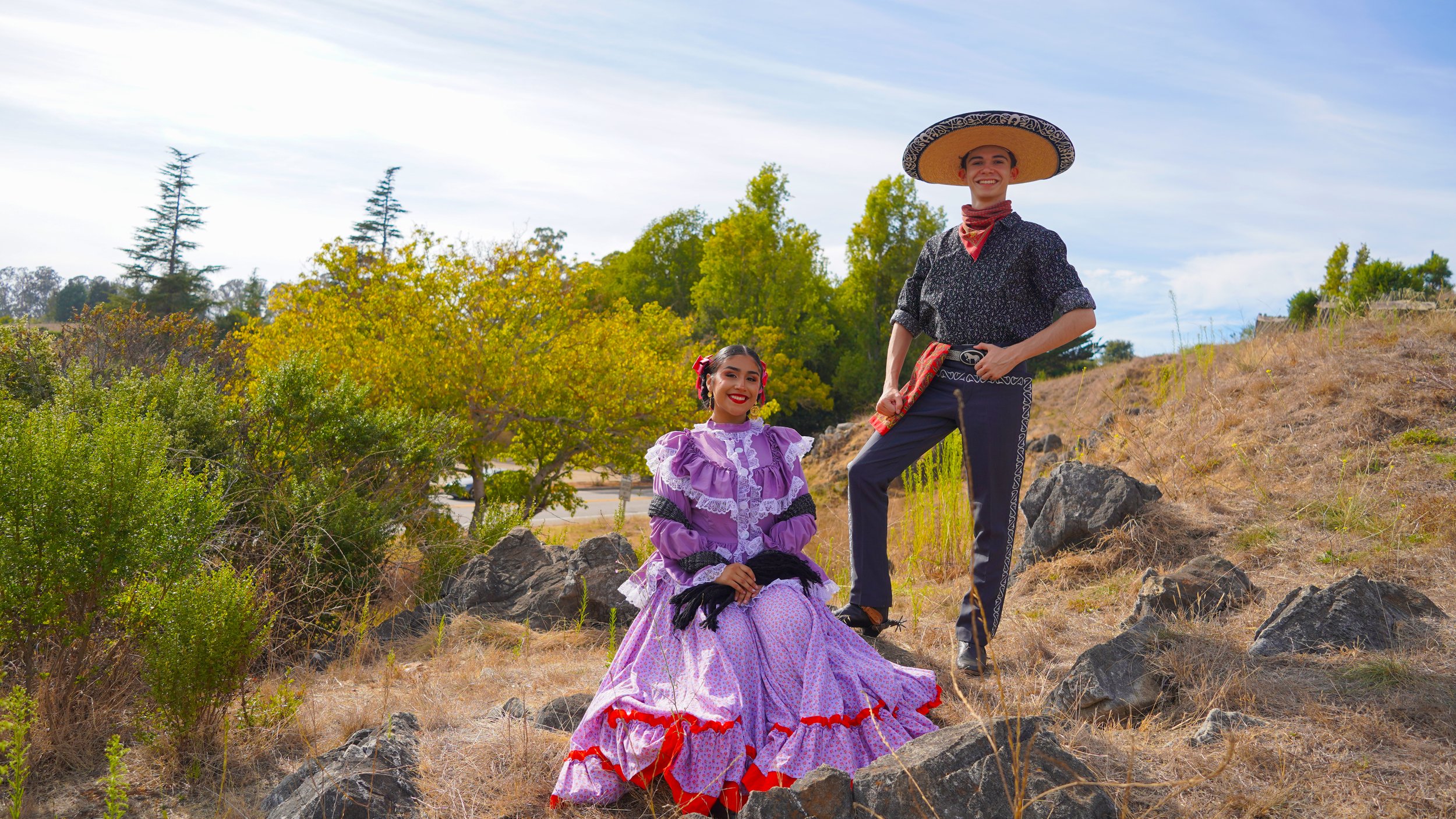
In the traditional Mexican corrido, storytelling becomes song. Singers serve as chroniclers, carrying accounts of love, tragedy, injustice, and resistance from one community to another. Narrative verses preserve the stories of everyday struggles alongside defining events, keeping their human consequences and morals in the minds of their listeners.
These choreographies give life to stories which have been held in music and poetry. The emotional weight of a verse takes physical form, bringing its conflicts, losses, and hopes into the present. The corrido becomes a way to confront wounds, honor courage, and question the world we inherit. On stage, its characters ask us to watch closely and consider the lessons their stories still have to tell us.
EL TECOLOTE DE GUADAÑA • LA ZENAIDA • CORRIDO DE POLINO GUERRERO
Original choreography: Rafael Zamarripa Castañeda.
7. EL HUAPANGO VERACRUZANO
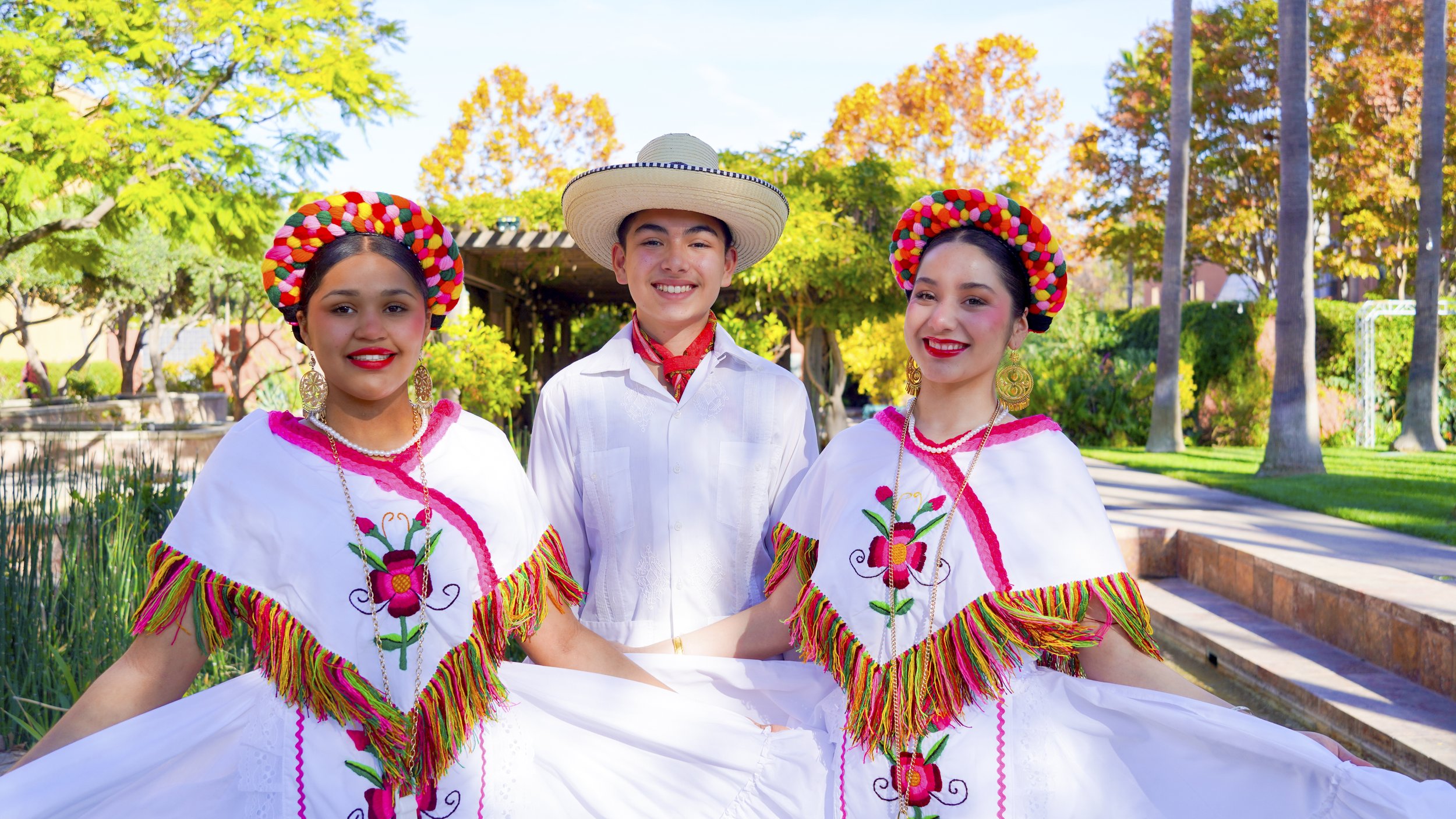
In the Huasteca, soaring falsetto and intricate violin melodies rise above the rhythmic accompaniment of the jarana and huapanguera. Poetry and musical innovation meet in a tradition sustained by the joy of gathering. The dancers’ zapateado becomes one with the playful strings, marking the rhythm with improvised sequences.
Behind this brightness lies demanding artistry. Complex rhythms call for precision, stamina, and attentive listening; the relationship between music and movement requires control and expressive freedom. For Los Lupeños Juvenil, this suite marks a new level of growth. Our young dancers bring increasing confidence and musicality to the stage, turning dedicated practice into a vibrant shared expression. Their achievement celebrates both the richness of the tradition and the possibilities ahead.
LA MALAGUEÑA • LA LEVA • LA PETENERA
Original choreography: Samuel Cortez Balderas / Steven Gastelum
8. SALÓN MÉXICO
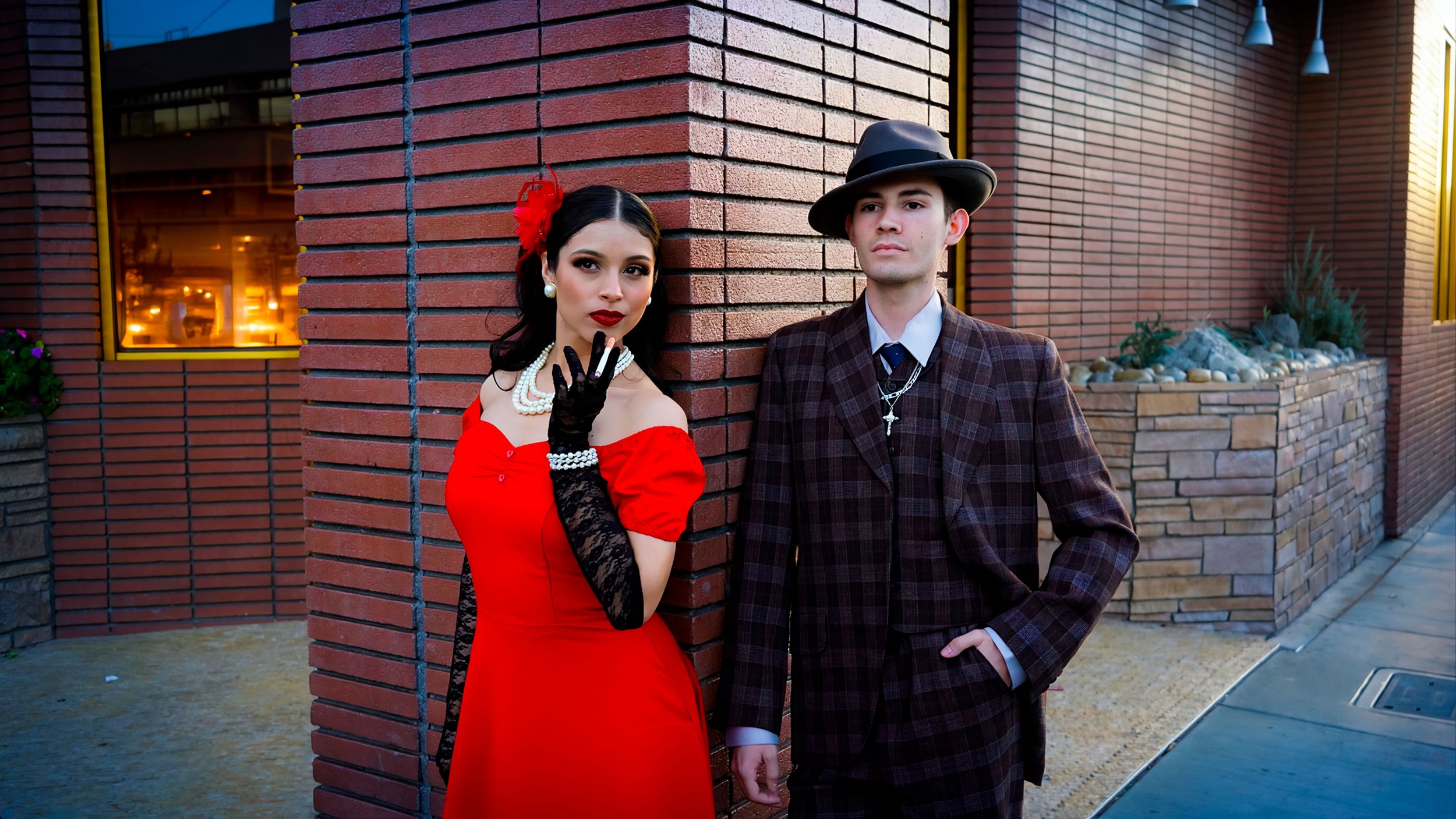
Beneath the city lights, the dance floor becomes a place to belong, to dream, and to claim a little freedom. Drawing on Mexico’s vibrant ballroom culture, this piece brings together the elegance of danzón, the playfulness of cha-cha-chá, the exuberance of mambo, and the catchy rhythms of cumbia. Pachuco pride brings bold style and confidence to the forefront.
Here, glamour belongs to the people. Encounters on the dance floor unfold with joy, desire, and possibility, capturing a city imagining its future through dance.
An original work by our co-founder Susie Cashion, Salón México holds a special place in the heart of Los Lupeños de San José. Performing her piece renews our connection to her artistry and imagination. Through the energy of our current dancers, Susie’s legacy continues to move us.
MARÍA CRISTINA • ALMENDRA • LA POLLERA COLORÁ • MAMBO NO. 5
Original choreography: Susie Cashion
Cashion Cultural Legacy
The non-profit Cashion Cultural Legacy (CCL) is committed to sustaining the preservation, presentation, and education of Mexican folk culture through dance. In honor and recognition of Dr. Susan V. Cashion and her many contributions to the dance world, the CCL pursues this mission by operating two Mexican folk-dance companies (Los Lupeños de San José & Los Lupeños Juvenil), offering accessible dance education to the community (Los Lupeños Academy), operating an Artist Exchange of dancers, directors, and choreographers between California and México, and documenting the art form via a nascent Publications Project. Find out more at loslupenos.org
Staff
Samuel Cortez Balderas, Interim Executive Director
Diana Ramirez, Operations Director
Steven Gastelum Valdez, Assistant Artistic Director
Alejandro Ocampo, Administrative Assistant
Liz González, Academy Administrator
Board Of Directors
Omar Rodríguez, President
Liza M. Noriega, Vice-President
Marco Chávez, Treasurer
Lupe H. Ramirez-Steele, Secretary
Kelly Chu
Mandy Rose Gutiérrez